
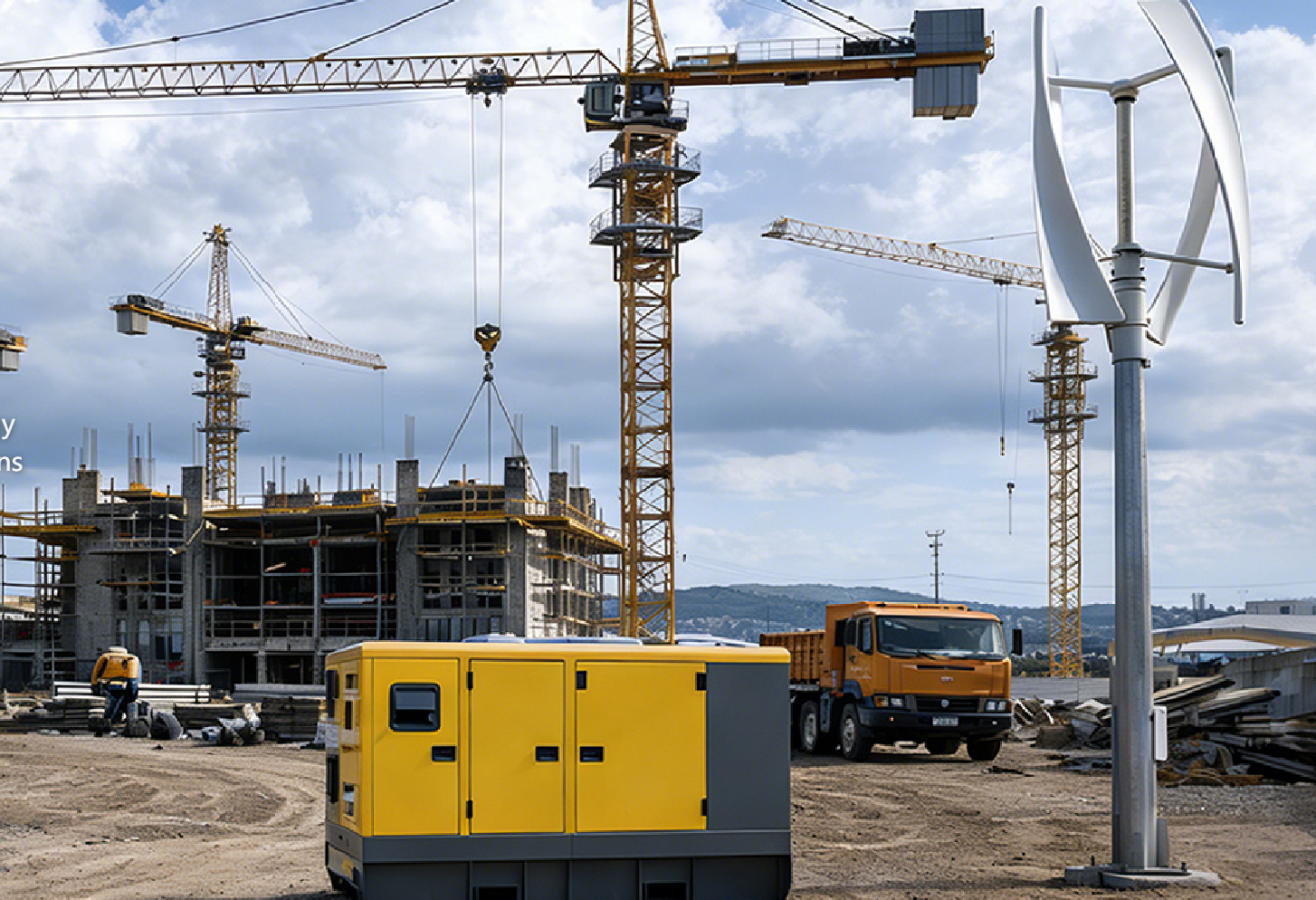
Problem statement: why conventional diesel standby falls short
Diesel generators still dominate backup power because they start reliably and store energy on the vehicle shelf, but they also run inefficiently when used for extended or variable loads. Operators face two linked problems: high fuel consumption during low-load periods and slower response to transient demand that stresses mechanical systems. For teams evaluating options, talking to experienced microgrid companies often reveals the same operational pain points repeated across sites. A clear alternative architecture—diesel paired with battery energy storage—aims to address those exact failures.
How the hybrid solves the core operational problem
At its simplest, a diesel–battery hybrid shifts short-duration, high-power, or variable demand from the genset to the battery. The battery supplies immediate transients and peak power while the diesel runs steadier at efficient load levels or remains off until needed. This reduces specific fuel consumption and wear on the engine. The key technical elements are a bidirectional inverter, a battery management system, a controls layer that decides which source supplies load, and protection schemes to enable safe islanded operation.
What performance gains are reasonable to expect
Expect measurable reductions in fuel use and runtime, but avoid fixed promises—results vary by duty cycle. Field reports and technical reviews show that sites dominated by short-duration peaks benefit the most, because batteries remove those peaks entirely from the genset duty. For longer sustained outages the diesel still provides the bulk of energy, so batteries shorten genset runtime rather than replace it. Operators experienced in remote deployments after events like Puerto Rico after Hurricane Maria reported clearer reliability outcomes when hybrid strategies were applied, though exact savings depended on sizing and controls.
Design choices that determine outcomes
Decisions that change results materially include battery capacity and power rating, inverter topology, control logic, and how the system handles transitions. Common design patterns:- High-power, moderate-capacity batteries for peak shaving and fast response.- Larger-capacity batteries when fuel minimization over hours is required.- Controls that prioritize engine start minimization versus fuel-floor efficiency.- Inclusion of synchronous or virtual inertia if grid stability during black starts is necessary.Each choice trades capital cost against operational fuel savings, and the control strategy is often the largest determinant of performance.
Implementation pitfalls and how they show up in operations
The usual mistakes are predictable: undersized batteries that don’t change genset runtime; simplistic controls that oscillate between sources and increase wear; and failing to integrate maintenance regimes for both chemical and mechanical assets. Also watch for mismatched warranties and unclear responsibilities between battery suppliers and genset vendors—those gaps reveal themselves as finger-pointing during failures.
Alternatives and when hybrids are the right fit
Pure battery-plus-inverter systems work very well where outages are short and renewable generation is available. Solar plus battery can replace diesel entirely in some sites, but only if solar resource, storage, and space align with load and reliability needs. Pure diesel is still appropriate where storage economics don’t stack up or where refueling logistics are simpler. Hybrids are the pragmatic middle ground when you need meaningful fuel reduction without sacrificing the proven energy density and long-duration capability of diesel.
Operational practices that preserve savings
To realize expected benefits, implement data-driven commissioning and continuous commissioning: verify control setpoints against measured load shapes, tune the battery state-of-charge window to avoid unnecessary generator starts, and track fuel use before and after commissioning for at least one seasonal cycle. Periodic exercises that simulate islanding, black starts, and battery degradation provide high-confidence evidence that the system will behave as intended during a real outage.
Why this matters for project owners and integrators
Owners need predictable economics; integrators must map controls to realistic operating scenarios. That alignment requires experience with both engine behavior and power-electronic controls. Organizations seeking integrated solutions frequently consult a dedicated sic microgrid technology company to test interface points and clarify lifecycle responsibilities before procurement decisions are finalized.
Conclusion
A diesel–battery hybrid resolves the principal operational failure of relying solely on diesel: inefficient, high-emission operation during variable demand. When properly sized, controlled, and commissioned, hybrids cut fuel use, reduce mechanical wear, and maintain long-duration backup capability. Bringing those outcomes together calls for measured engineering, realistic testing, and experienced system integration—attributes associated with integrators such as WidenEdge that emphasize concrete performance validation over optimistic projections.