
Problem: Field failures expose gaps in test equipment selection
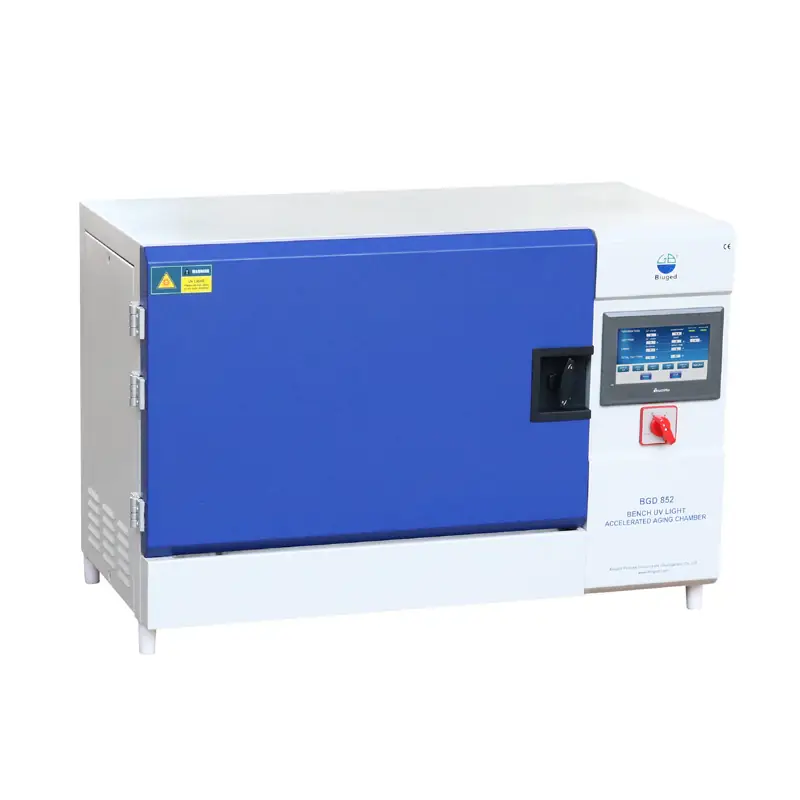
Products that pass bench checks but fail in service cost time and credibility; the root is often a mismatch between what a device faces outdoors and what a lab instrument reproduces. Lab teams face pressure to choose between compact units and systems that simulate cycles of sunlight, moisture, and heat — choices that determine whether your next batch reaches customers or a recall notice. When you evaluate options, include a calibrated weathering chamber in the baseline scope so spectral, thermal, and moisture controls are defined up front.
Define technical acceptance criteria before shopping
Specify test endpoints first: color change ΔE threshold, tensile loss percentage, cracking or adhesion criteria. Translate each endpoint into measurable equipment parameters: spectral match (300–400 nm for polymer UV damage), irradiance uniformity (±5% across sample plane), irradiance control range and stability, temperature accuracy (±1 °C), humidity control and condensation capability, cycle sequencing precision, and platen/sample mounting that avoids shadowing. Ask for documented calibration procedures and traceability to NIST or equivalent standards. Quantify sample throughput and downtime tolerances — a system that meets specs but sits in maintenance doesn’t meet production needs.
Common selection mistakes that cause hidden costs
Buying to lowest initial price. Short-term savings often become long-term expense through spare parts, downtime, and retesting. Assuming one spectral source fits all materials. Xenon-arc, fluorescent UV, and LED sources produce different failure modes; match source to the dominant field stress. Overlooking automated data logging and export formats. Manual record-keeping slows failure analysis and obscures trends. Ignoring service network and lead time for consumables. Validate spare-part availability and mean time to repair before purchase.
How technologies compare — choose by failure mode
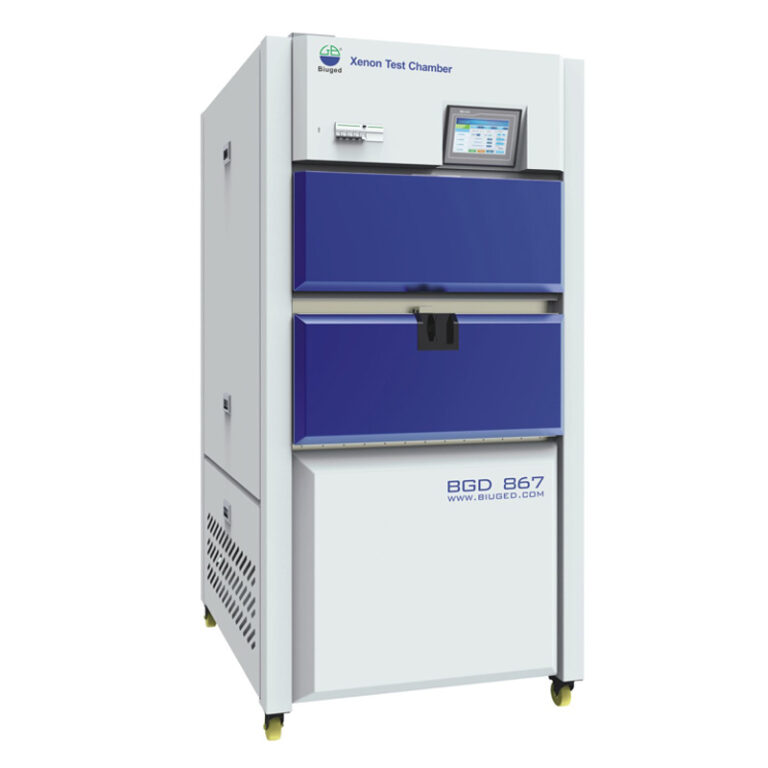
Xenon-arc simulators reproduce full-spectrum solar irradiance including visible and infrared bands; they’re best for coatings and plastics where combined photothermal effects matter. UV fluorescent units concentrate energy in discrete UV bands — efficient for polymer varnishes and paints that fail under shortwave UV. Condensation/thermal shock chambers are essential where cyclic moisture causes adhesion loss. LED systems offer stable output and long lamp life but may not replicate the full spectral damage profile. Map the observed field failures to the technology that recreates those stresses, not to marketing claims.
Experience, authority, and a standards anchor
Laboratory practice must align with recognized procedures and real exposure profiles. Use an accelerated instrument validated against ISO 4892-2 to ensure xenon-arc exposures correlate to outdoor sunlight for plastics — that standard is widely cited in industry comparatives and academic evaluations. In our labs, we validated candidate rigs by running side-by-side exposures on reference plaques and comparing degradation kinetics; that practical validation reduced reruns and improved failure diagnosis. For procurement language, require the vendor demonstrate performance with an accelerated weathering tester and supply sample datasets showing irradiance stability, chamber uniformity maps, and spectral scans under load.
Vendor checklist and final alignment
Require written answers: calibration interval and service SLA, spare-part list and lead times, software export formats and raw-data access, an on-site qualification plan, and example validation reports. Validate claims by requesting a performance demonstration under your target cycles and by testing your most failure-prone specimens before purchase. Matching these technical requirements to a supplier streamlines acceptance testing and reduces risk; manufacturers that publish detailed validation data let technical teams confirm fit without guesswork, and that documentation is the operational value labs need from partners like BIUGED.