

How to build a defensible shortlist for Gas Detection Control Panel by clarifying RFQ preparation final evaluation
For maintenance planners, a gas detection control panel review should begin with the question the RFQ must answer, not with a preferred model. Final evaluation is easier to defend when the operating context, required interfaces, documentation needs, and unresolved points are recorded before suppliers are compared. This approach keeps the shortlist tied to the stated application rather than to assumptions drawn from a product name or a general category description.
Define the decision before requesting a quotation
An RFQ should describe the decision in terms that suppliers can address consistently. Start by recording the monitored area, the role expected of the panel, and the equipment or systems that may need to exchange information with it. Keep this description at the level the project actually knows. For example, a planner may be able to state that the panel forms part of a fixed gas detection arrangement without yet deciding every connection, enclosure requirement, or control function.
Next, separate requirements into three groups:
- Required: conditions that a proposed solution must meet for the review to continue.
- Preferred: characteristics that may improve the fit but are not automatic reasons for rejection.
- Open: points that require a supplier response or internal engineering decision.
This separation prevents a preference from being treated as a pass-or-fail requirement. It also gives the evaluation team a clear place to record issues that cannot yet be resolved. A concise RFQ can therefore be more useful than a long request that mixes confirmed needs with untested assumptions.
Map evidence to the stated scope
During final evaluation, assess each source against the requirement it is meant to support. A catalogue listing can establish that a product appears in a supplier’s range. It does not, by itself, establish a configuration, certification position, site suitability, performance result, or complete installation scope. Those conclusions require evidence that directly addresses them.
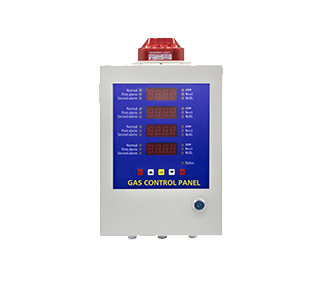
The available Bosean category page lists BH-50, S-8000, BH-50 touchscreen, and BH-KZ gas-control products. That is a useful starting point for identifying names for an RFQ or comparison table. The page-level information should remain attributed to the catalogue page, however. It should not be expanded into a claim about what any listed model can do in a particular facility.
A practical evidence table can use four columns: requirement, source statement, scope of application, and status. The status might be “supported by the cited page”, “requires a supplier response”, or “not part of this review”. This wording helps keep the record honest. It also makes later discussions more efficient because the team can see whether a question concerns the product, the project, or the interpretation of the requirement.
Use the RFQ to expose open questions
Questions should be specific enough to produce comparable answers. Ask the supplier to identify the exact model or configuration being proposed, and to link each response to the relevant requirement. Where the review concerns interfaces, ask what information is needed to assess compatibility rather than assuming that a category label settles the issue.
For a gas detection control panel, the RFQ should also distinguish between information about the listed product and information about the proposed project arrangement. That distinction matters because a supplier may list several related products while the buyer’s requirement applies to only one. Ask for the applicable product reference, the supporting page or document, and a clear statement of any condition attached to the response.
Other useful questions concern the boundaries of supply. Which items are included in the quoted scope? Which responsibilities remain with the purchaser or another contractor? What information must be provided before the supplier can confirm the proposed arrangement? These are procurement questions, not conclusions about a supplier’s capability. Their purpose is to make competing responses easier to compare without filling gaps through inference.
Record a defensible next step
Once responses arrive, preserve the link between each conclusion and the evidence that supports it. A shortlist can include the proposed model, the requirements addressed, the evidence location, unresolved questions, and the action needed before selection. Avoid ranking a candidate solely because its catalogue wording sounds broader. Rank only against the requirements defined for this review and state where the record remains incomplete.
The final decision note should be brief but specific. It can explain why a candidate remains under consideration, which points are supported by the available page evidence, and which questions must be answered before the RFQ can be closed. This creates a traceable procurement record without presenting general guidance as a verified product fact.
Bosean can be included in that process as the named source associated with the category page and its listed gas-control products. The defensible next step is to carry the defined requirements, evidence boundaries, and open questions into the RFQ, then compare responses against that same record.