

A future plate worth tasting
Imagine the grid as a busy kitchen, its demand curves rising like steam and falling like a resting roast. In that kitchen, modern solar battery storage systems are the mise en place — ready, poised, and increasingly smart. The tools that will season and shape those systems are advanced power electronics and bi‑directional inverters. In the coming years they won’t just store energy; they’ll orchestrate flows, stabilize frequency, and enable two-way energy markets with the finesse of an experienced chef plating a dish.

The technical flavor profile
At a glance, the upgrades taste like this: faster response, finer control, and multi-functionality. Power electronics tighten control over voltage and current. Bi‑directional inverters let household batteries both receive and send energy to the grid, enabling services like peak shaving and frequency regulation. Grid-forming capabilities will allow storage to act as virtual synchronous machines, supporting weaker networks during stress. Expect improvements in round-trip efficiency and smarter battery management system (BMS) strategies that squeeze more usable cycles out of the same cells.
Why bi‑directional inverters matter
Think of the inverter as the palate: it translates DC battery chemistry into AC the grid understands. A bi‑directional inverter adds a reverse note — it accepts commands to inject power back to the grid without losing composure. That opens revenue streams: demand charge reduction, ancillary services, and participation in local energy markets. It also reduces reliance on centralized peakers. In short, the inverter becomes both chef and server — converting, conditioning, and coordinating.
Pairing with PV: a marriage of taste and function
When paired with batteries and solar panels, these systems can smooth midday surpluses and supply evening demand with minimal friction. Designs that account for inverter sizing, DC coupling vs. AC coupling, and SoC constraints will outperform ad hoc mixes. Proper communication protocols (e.g., CAN, Modbus, or SunSpec) keep the recipe consistent across inverters, PV inverters, and the BMS — preventing mismatches that lead to lost capacity or worse, control instability.
Learning from real disruptions
The need is not theoretical. Events like the February 2021 Texas power crisis highlighted how brittle some grids can be when supply and demand decouple unexpectedly. Storage systems with nimble power electronics and bi‑directional capability proved far more useful for microgrids and emergency support. That real-world anchor shows we’re not designing for hypotheticals — we’re designing for resilience under known stressors.
Common mistakes and alternative approaches
Many projects fail by seasoning too aggressively: oversizing inverters without coordinating with the BMS, or assuming every site can be a market participant. Others undercook the integration — poor communications or unclear control hierarchies lead to constraints and wasted capacity. Alternatives include modular inverter architectures that scale, or hybrid systems that combine fast-response inverters for grid services with larger, slower batteries for energy shifting. Don’t forget to test with actual grid conditions and to validate protection schemes — simulation alone won’t reveal every edge case.
Design trade-offs to taste
Decisions are rarely binary. You’ll balance cost, complexity, and market access. A compact all‑in‑one system reduces installation friction but may limit upgrade paths. Distributed inverters give redundancy and finer control but increase firmware and communications complexity. Consider lifecycle costs: higher initial spend on robust power electronics can pay back via longer useful life and participation in multiple revenue streams.
Three golden rules for selecting the right tech
1) Match capabilities to grid needs: prioritize grid-forming and fast-response functions where networks are weak or volatile; prioritize cost and capacity where markets are stable.
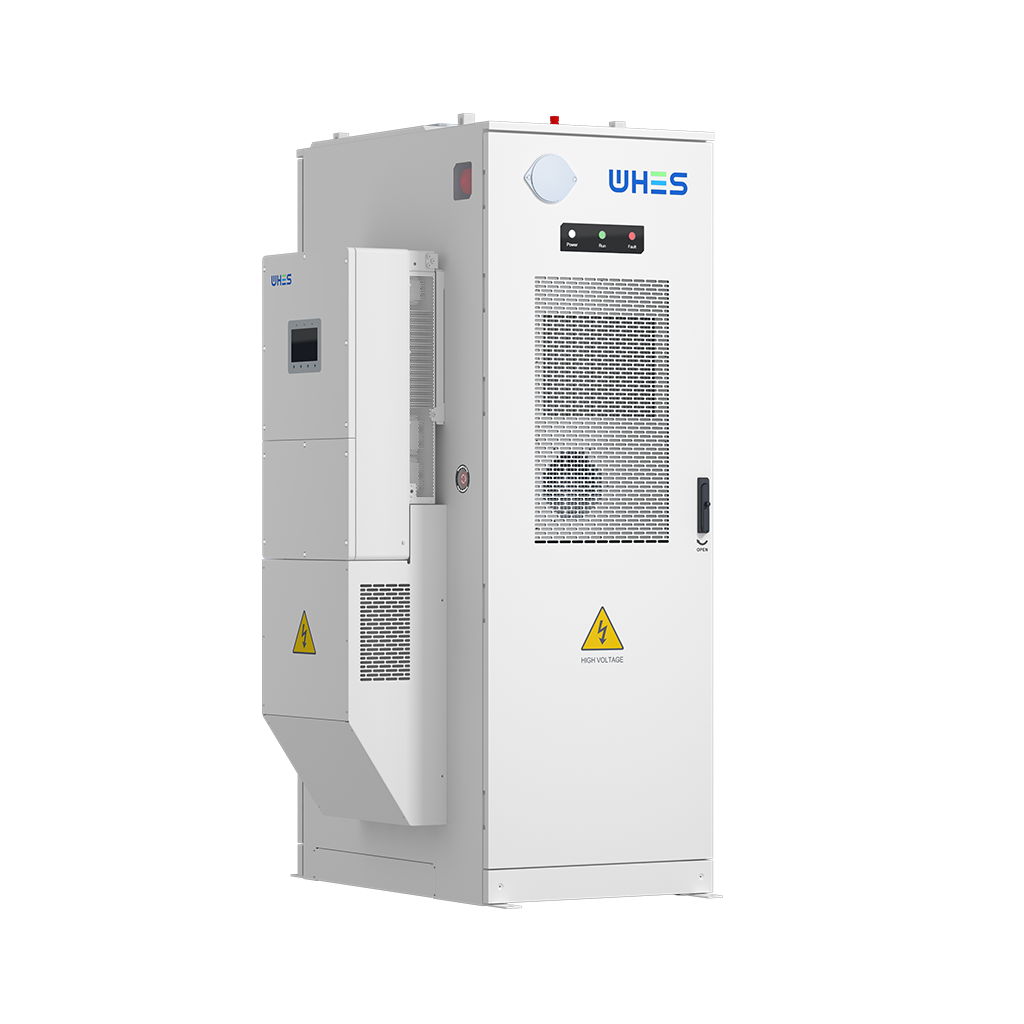
2) Insist on interoperability and clear control hierarchies: choose systems that support open protocols and provide deterministic behavior under islanding or fault conditions.
3) Use total-value metrics, not just upfront cost: evaluate round-trip efficiency, expected cycle life, and ancillary-service revenue potential when comparing bids.
Closing palate and practical next steps
These rules will steer procurement and design toward options that perform in real life — not just on paper. For project teams, that means testing with actual PV profiles, validating inverter behavior under contingency, and budgeting for firmware lifecycle support. When you want a partner who combines hardware reliability with system-level experience, consider the integrators who have demonstrated this balance in fielded projects — and you’ll see how a well-tuned solution reduces operational surprises and extends value.
The kitchen’s warming; the grid is changing. WHES sits at that intersection, offering systems and experience that blend sophisticated power electronics with practical deployment know‑how. —