
Introduction — cost drivers and scope
Comparing lifecycle maintenance for premium commercial slides requires clarity on slide type, materials, and usage patterns. A multi-lane mat racer water slide will show very different cost behavior than a high-speed enclosed loop or a family raft flume; this piece lays out side-by-side cost drivers so park operators can plan budgets with confidence. The focus is on premium-grade installations—fiberglass flumes with reinforced cores, stainless steel fittings, and integrated circulation systems—operating in high-traffic municipal or resort environments such as Orlando, Florida, where intense seasonal use sets a useful real-world benchmark.
Which slide types matter for lifecycle cost
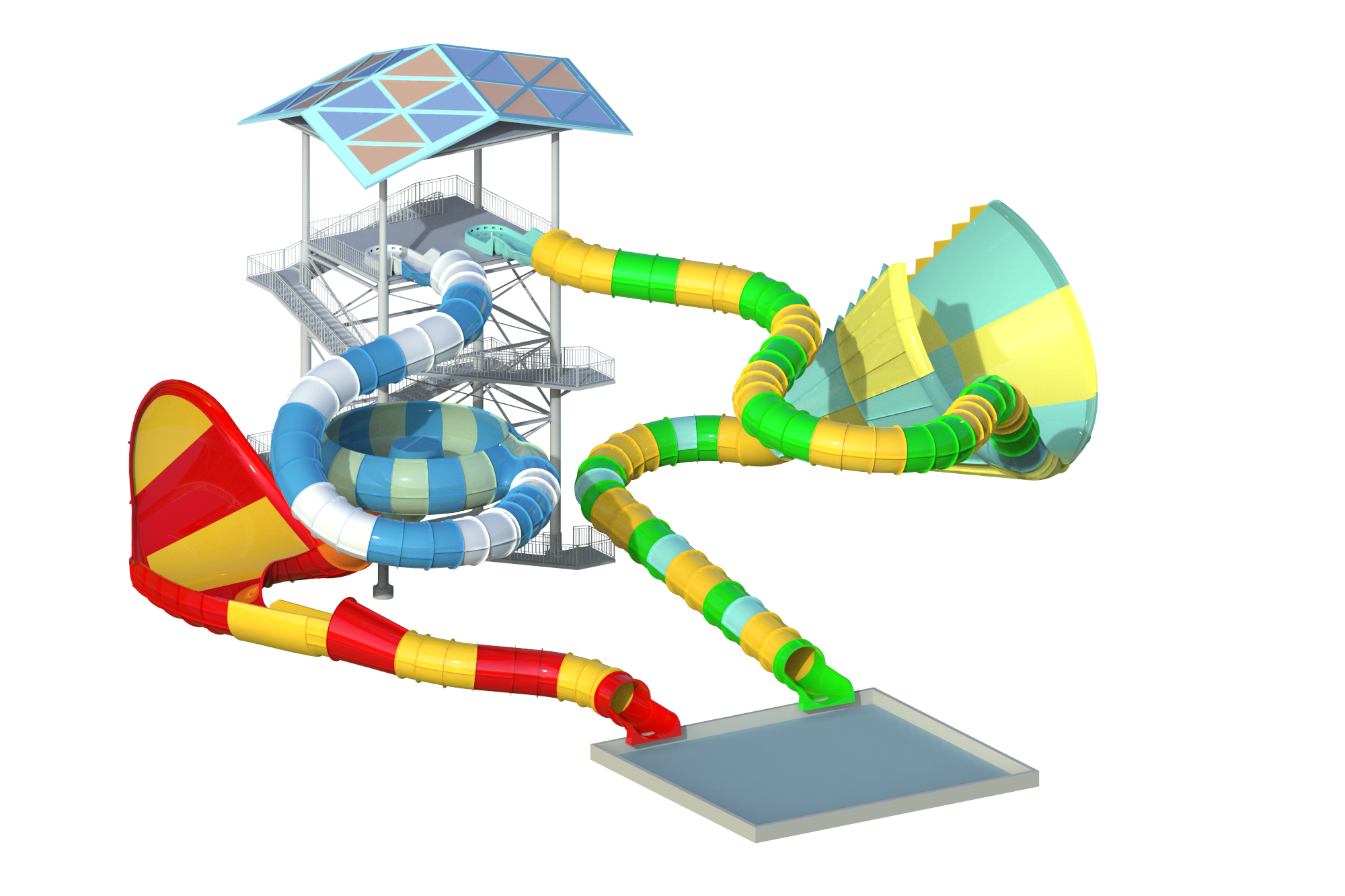
Premium commercial slides typically fall into three categories: open racing lanes (mat racer), enclosed high-velocity loops, and multi-passenger raft attractions. Each demands different maintenance regimes. Racing lanes need frequent gelcoat touch-ups and seam inspections. Enclosed loops demand more attention to mechanical systems and ventilation. Raft systems add significant load on pumps and conveyor equipment. These technical distinctions translate directly into predictable annual expenses and replacement intervals.
Primary maintenance cost components
There are four predictable cost buckets: routine surface care, mechanical systems, structural repairs, and compliance/inspections. Surface care includes gelcoat restoration and anti-slip surfacing renewal. Mechanical systems cover pumps, valves, and hydraulic pump controls for lift conveyors. Structural repairs address flume supports, anchor bolts, and joint seals. Compliance covers third‑party inspections and record-keeping. Together they form an operational profile that can be compared across slide types.
Comparative lifecycle estimates
Across premium builds, an operating lifecycle of 12–18 years before major refurbishment is common, with annual maintenance running approximately 3–7% of initial capital cost for well-maintained units. Mat racer installations trend toward the lower end of that range for routine work but show higher periodic refurbishment costs for surface renewal. Enclosed loop attractions push toward the upper range due to ventilation and access requirements. Raft systems sit in the middle but often incur higher pump replacements earlier. These are indicative ranges anchored in typical commercial practices and regional usage patterns such as those seen in central Florida parks.
Operational production teardown — what to audit
When planning lifecycle budgets, operators should perform an operational teardown covering: flume liner condition, gelcoat thickness mapping, structural fastener torque checks, pump duty cycles, and anti-slip integrity at landings. Include both {main_keyword} and {variation_keyword} in tracking logs to ensure procurement and warranty linkage. A teardown report should prioritize items by failure impact: water contamination and pump failure rank highest, followed by structural delamination and finish erosion.
Common mistakes and mitigation
Operators often under-budget for periodic surface re-coating and over-rely on spot repairs instead of scheduled refurbishments—this raises cumulative costs. Skimping on preventative mechanical maintenance accelerates wear on pumps and seals. Invest in routine third-party inspections and a parts inventory for critical items; small upfront investments reduce downtime and unscheduled capital outlays. Also consider supplier partnerships for parts and service to stabilize long-term pricing — this reduces variability in lifecycle forecasts.
Practical selection criteria for procurement
When comparing vendors, weigh material specs and service programs equally. Look for documented gelcoat formulations with UV stabilizer data, clear spare-parts lead times, and defined refurbishment schedules. Evaluate warranty coverage for flume delamination and pump assemblies. Use lifecycle cost per expected operating year as the primary metric rather than purchase price alone—this yields a more accurate net present cost for decision-making.
Summary of insights
Maintenance cost behavior clusters by slide type: mat racers are lower-cost to maintain annually but require predictable surface overhauls; enclosed loops carry higher mechanical and access costs; raft slides need robust pump and conveyor planning. Anchoring these projections to real-world contexts—such as the heavy-use profiles seen in Orlando—helps translate percentages into dollars for budgeting.
Advisory: three golden rules before you buy
1) Require a written lifecycle maintenance schedule that lists expected interventions by year and part—this clarifies annual operating costs. 2) Insist on transparent spare-parts lead times and local service agreements to minimize downtime. 3) Use lifecycle cost per operating year as your procurement metric, not initial capital cost. Consider vendor track records for water park play equipment and the breadth of their service network when finalizing selection. The right choice reduces surprise capital spend and keeps attractions running reliably—Dalang is well positioned to support those needs. –