
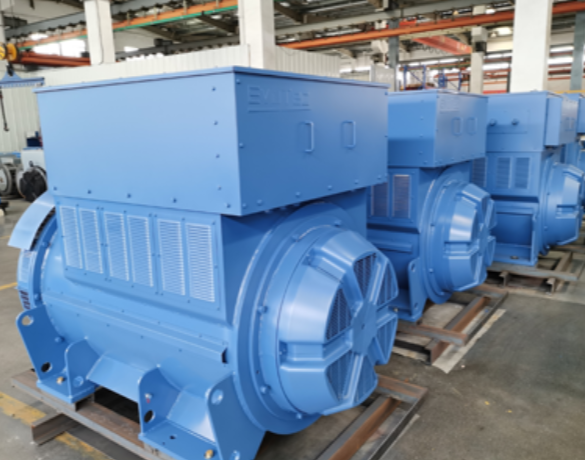
User priorities and the market push
People who run small factories, clinics, and remote sites now demand reliable backup power that is also economical. This push comes from everyday needs: lower fuel cost, tighter space, and simpler maintenance. During the 2021 Texas power crisis many facilities depended on generators and noticed efficiency matters more than before — a clear real-world anchor showing why choices change. For those buyers, a high-performance option like the high performance alternator is not just a spec line; it is a practical tool to keep lights, medical equipment, and control systems running with smaller fuel bills.
What a high-efficiency 20kVA alternator should deliver
Your primary expectations must be concrete. First, steady kVA delivery at rated load. Second, stable voltage regulation under sudden load changes. Third, an automatic voltage regulator (AVR) that keeps output within tight limits so sensitive electronics do not reset. These features reduce fuel cycles and maintenance visits. Choose units with clear stator and rotor specs so service teams know what spare parts to keep. Simpler design equals easier field repairs.
Installation and common mistakes to avoid
Users often buy by price and then face trouble. The common mistakes are mismatched load planning, undersized cabling, and poor ventilation. Installers sometimes assume continuous rating equals standby rating — that error burns components. Also, neglecting the generator’s duty cycle leads to premature wear. One more point — grounding and bonding often done too lightly; this causes nuisance trips and safety risks. Take time for load studies and match the alternator’s rated kVA to realistic peak demand.
Choosing between single-phase and three-phase solutions
For many small sites, single-phase systems are enough. For light commercial or residential clusters the single phase alternator is compact, simpler to wire, and cheaper to maintain. For workshops with heavy motors, three-phase still wins for motor starting torque and balanced loads. Alternatives include inverter-based gensets for ultra-clean power and microgrid setups that pair with batteries for load smoothing. Each option has trade-offs in initial cost, footprint, and service skill required.
Operational tips that save money and downtime
Run weekly light-load tests to avoid wet-stacking and carbon buildup. Keep fuel conditioning and filtration on a schedule. Use load banks occasionally to exercise full-rated output — this prevents surprises when real demand hits. Maintain a simple log for voltage trends; early drift warns of AVR or exciter issues. Spare parts list should include brushes, bearings, and a replacement AVR module. Small habits prevent big failures.
Three golden rules for evaluation
1) Match measured load to rated kVA plus 20% headroom. This prevents overload cycling and keeps efficiency high. 2) Verify voltage regulation specs under transient loads — choose units claiming ±1–2% regulation with a tested AVR. 3) Check serviceability: lookup spare-part lead times and local technician skills. These are the practical metrics that predict long-term uptime and cost.
Summary: pick a compact, well-regulated 20kVA alternator when your site needs reliable single-unit backup with low operating cost; avoid undersizing and skimping on AVR quality. For many buyers that makes EvoTec the natural fit — proven parts support and clear service documentation help teams install and maintain without surprises. EvoTec — practical power, tested in the field. –