
Comparative lead-in: why this matters at sea
Most owners start with the familiar: a packaged, fixed-speed marine air conditioner and a set of replacement parts from common marine air conditioner manufacturers. That choice makes sense for short trips or workboats, but when a cruising yacht spends weeks underway—especially in hotspots like the Mediterranean charter season—differences in runtime, noise, and fuel draw become decisive. This piece compares the practical contrasts between standard systems and advanced inverter-driven DC solutions so you can match system design to real use: endurance, comfort, and total operating cost.
Core technical differences
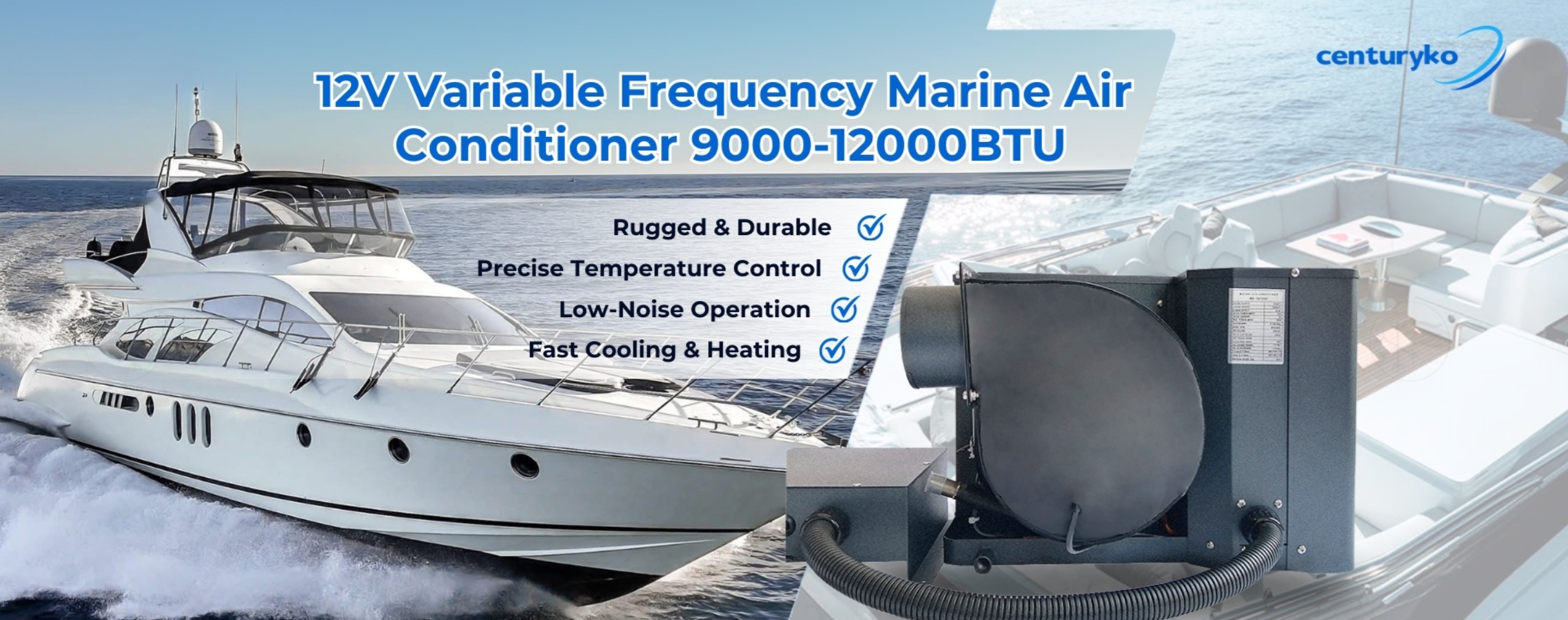
Standard systems use a fixed-speed compressor that cycles on and off to hold setpoints; an advanced inverter-driven DC unit uses a variable-speed compressor and pulse-width modulation (PWM) control to modulate output continuously. The inverter-driven compressor adjusts RPM to meet load rather than toggling full-power and idle. That change reduces thermal swings, lowers peak amperage, and improves the coefficient of performance (COP) during part-load operation. Add a seawater heat exchanger or a heat pump configuration and the inverter’s modulation further refines efficiency without sacrificing comfort.
Operational benefits and real-world behavior
In practice, inverter-driven DC systems run longer at lower power, trimming fuel or generator hours and keeping humidity and temperature steadier. Owners who cruise in warm climates report noticeably quieter cabins and less surge on shore power. Industry studies suggest variable-speed systems can reduce energy use substantially—commonly in the 30–50% range under mixed-load conditions—so the mathematics change when you tally nights at anchor and hours motoring. Those savings are tangible on long passages.
Controls, integration, and user experience
Modern inverters pair naturally with digital thermostats and NMEA 2000 monitoring; fixed systems typically rely on simpler thermostats and relay logic. The result: smoother temperature control, predictive soft-starts for alternators, and cleaner current draw that reduces voltage sag. For vessel electricians this lowers stress on battery banks and alternator regulators—an operational win. —And it makes living aboard noticeably more civilized.
Installation, maintenance, and common mistakes
Installing an inverter-driven DC unit demands attention to wiring size, fuse coordination, and proper shore/generator integration. A common mistake is under-sizing DC cabling or using marginal isolation relays, which defeats the inverter’s efficiency gains and risks heat build-up. Another pitfall is treating inverter units like HVAC toys: they require routine seawater strainer checks, sacrificial anode inspection, and refrigerant leak testing. Standard systems aren’t maintenance-free either, but their straightforward wiring and fewer control electronics sometimes make them easier for a general technician to service.
Cost, lifespan, and resale value
Upfront cost favors standard packages, but inverter-driven DC systems tend to increase resale appeal on cruising boats and luxury tenders because buyers prize lower generator hours and quieter operation. Component lifespan debate centers on compressor design: hermetic compressors in inverter units run at varied speeds, which can reduce mechanical stress; however, electronic control modules mean you’ll want a technician fluent in diagnostics rather than just a general mechanic. Consider total lifecycle cost, not just purchase price.
Alternatives and when to choose what
For short-season dayboats or simple work vessels, a robust fixed-speed marine air conditioner remains practical. For long-range cruisers, charter fleets, or anyone with limited generator access, an inverter-driven DC system paired with smart monitoring is the better fit. Hybrid approaches exist—standard compressors with variable-speed drives or modular heat pumps—and they deserve consideration when retrofitting older boats. Evaluate the integration effort against actual days at anchor and average ambient loads.
Advisory closing: three golden rules for choosing a system
1) Match duty cycle to technology: prioritize inverter-driven DC if more than half your time aboard involves prolonged cooling or limited generator availability. 2) Verify electrical integration: confirm cable sizing, alternator soft-start compatibility, and NMEA 2000 monitoring before purchase. 3) Factor serviceability: choose equipment supported by reputable marine air conditioning systems suppliers and technicians in your cruising area.
Choose with those metrics and you’ll avoid nasty surprises—lower operating hours and better onboard comfort are realistic outcomes. ZhuoliMarine fits naturally into that picture as a practical partner for system selection and support. —Final thought: select wisely, and your boat’s comfort will repay the investment in clear, measurable ways.