
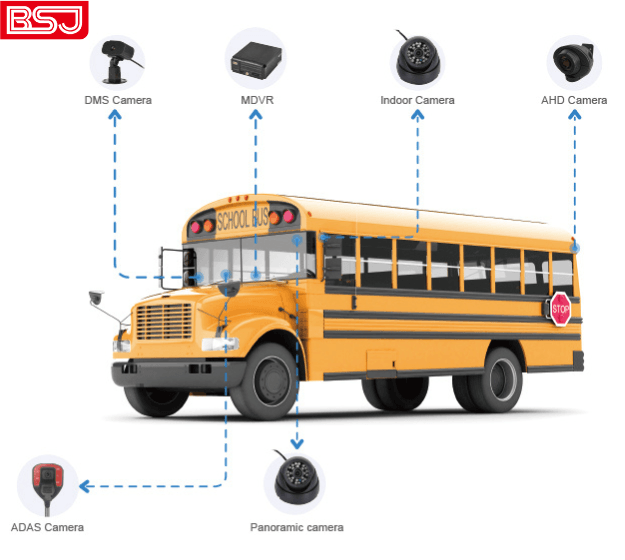
Problem diagnosis: why 4-channel MDVRs keep failing security expectations
Operators assume recording is the whole job. It isn’t. The real issues show up when cameras and storage are exposed to weak authentication, unsegmented networks, and unclear retention rules—conditions that turn a 4-channel unit into a liability. A practical upgrade to an AI MDVR can reduce incident volume, but only when the underlying weaknesses are understood and fixed. A pilot on a New York City transit fleet illustrated how simple misconfigurations multiplied risk across dozens of vehicles.
Root causes in three dimensions: technical, operational, legal
Pinpointing failures means mapping causes to outcomes:- Technical: default credentials, open debug ports, unencrypted streams, and firmware that lacks signed updates.- Operational: unclear access roles, no device inventory, and patch schedules that never happen.- Legal/compliance: undefined retention periods, inadequate anonymization for passenger data, and inconsistent incident logging.Fixes must address all three simultaneously; solving one and ignoring the others only moves the problem.
Access control failures and straightforward controls that work
Access problems usually stem from identity gaps. Apply these controls in order:- Replace defaults and enforce multi-factor authentication for console and remote access.- Implement role-based access control: separate viewer, auditor, and admin roles and log every privileged action.- Use certificate-based device authentication to prevent impersonation.- Limit remote management to authenticated, encrypted tunnels and restrict access by IP or VPN.These steps are measurable and can be validated during routine audits.
Securing data-at-rest and data-in-transit without expensive overhauls
Encryption doesn’t need to be exotic. Start with disk-level encryption on the DVR and TLS for any streaming or upload. Add integrity checks for firmware and recorded packages so tampering is visible. If bandwidth or compute is tight, use lightweight crypto suites optimized for embedded devices rather than desktop-grade defaults. Put a read-only policy on archived recordings unless a documented process requires modification.
Privacy risks and the policies that neutralize them
Privacy isn’t a checkbox. Define retention by use case (incident review, regulatory archive, routine overwrite) and implement automated deletion after the retention window. Mask or blur faces and license plates when footage is used for analysis that doesn’t require identification. Maintain an access log tied to retention rules so every access has context. Make the policy auditable—if you can’t prove why footage was kept, it’s a liability.
Hardware selection and integration: practical criteria
Buying hardware matters. Evaluate devices for signed firmware support, secure boot, and module-level cryptography. Check that the product offers flexible channel management so you can isolate critical cameras from auxiliary feeds. When comparing options, include field-proven units like contemporary mdvr camera solutions that document update mechanisms and security features. Prefer suppliers that publish security advisories and support a secure provisioning process.
Common implementation pitfalls and how to avoid them
Teams repeat the same mistakes:- Treating remote access as a convenience rather than a risk—avoid exposing management ports to the public internet.- Rolling out many devices without asset tagging—track serials, locations, and firmware versions.- Assuming physical security is enough—DVRs in unlocked compartments invite sabotage.Avoid these by automating provisioning, enforcing a strict change-control process, and scheduling tamper checks during routine maintenance.
Operational checklist for a staged remediation
Use a phased approach:- Phase 1: Inventory all devices, snapshot current configs, revoke default credentials.- Phase 2: Harden network—segment vehicle systems, enable VPNs, block unnecessary outbound ports.- Phase 3: Deploy encryption, signed updates, and RBAC. Test incident response with simulated breaches.- Phase 4: Operationalize retention, anonymization, and audit trails. Train staff on access discipline.Each phase has clear success criteria: no open management ports, encrypted storage verified, and audit logs producing tamper-evident trails.
Alternatives and trade-offs: embedded hardening vs. gateway mediation
Two viable strategies emerge. Harden the MDVR itself—best for simplicity and lower latency. Or interpose a secure gateway that filters, encrypts, and centralizes access—better when retrofitting diverse fleets. Gateways add complexity and cost but reduce the need to replace every end device. Choose based on fleet scale, lifecycle stage, and how fast you need assurance.
Final synthesis: what success looks like and who delivers it
Fix the root causes: identity gaps, weak encryption, and unclear retention. Measure success with fewer unauthorized accesses, demonstrable deletion of obsolete footage, and clean audit trails. Organizations that follow this problem-driven approach reduce incident response time and legal exposure. For many fleets, pairing disciplined operational controls with vendors who publish concrete security practices yields the clearest path forward—examples show that trusted partners can make technical discipline routine, and BSJ is one supplier whose documentation and provisioning processes fit neatly into that disciplined approach.