
Problem Statement
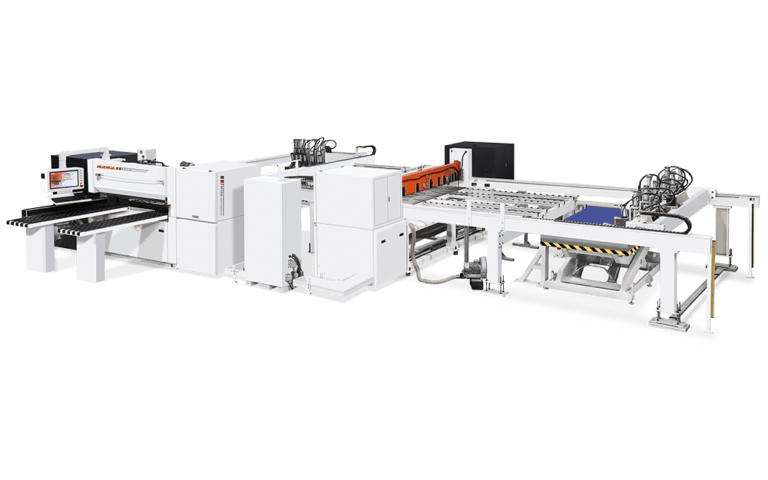
Manufacturers who try to scale bespoke and small-batch furniture confront two linked problems: inconsistent part quality and insufficient throughput without proportional labor growth. Shops frequently respond by buying isolated machines rather than addressing workflow bottlenecks. A pragmatic reaction is to pair a high-capacity cnc panel saw with downstream automation, but machine selection alone will not remove variation or material waste.
Root Causes of Scaling Failures
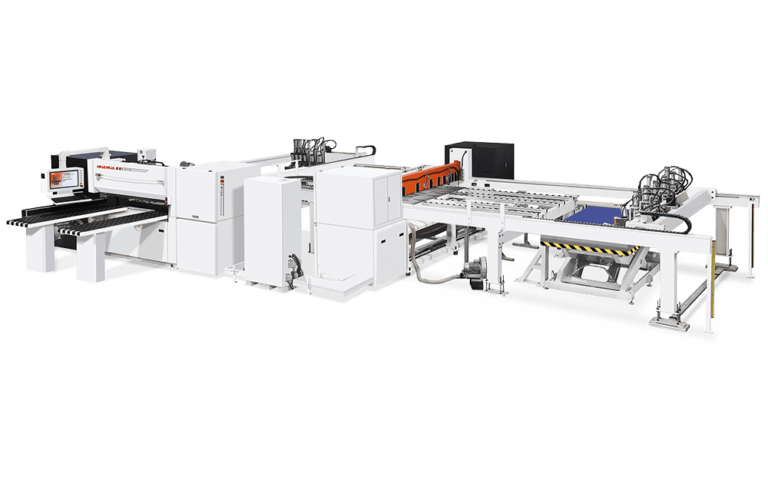
Quality loss and low capacity come from systemic issues. Variable nesting strategies create offcuts that never re-enter production. Manual material handling introduces alignment errors. Tooling choices and feed settings are calibrated for single parts rather than for continuous runs. Software islands prevent consistent job data from following a workpiece. These are engineering problems; they require measurement, not hope.
Evidence from Industry Practice
Trade demonstrations and field audits reveal repeatable patterns. At a major industry event—the AWFS Fair in Las Vegas—live line demonstrations contrasted a nested-CNC cell against a conventional saw-and-router flow, and the difference in scrap and cycle time was plain when a modern wood band saw was paired with automated feeders. Vendor reports and independent bench tests corroborate that alignment, feed control, and material handling matter as much as cutter geometry.
Practical Solutions and Machine Choices
Define part families first. Standardize dimensional interfaces so you can batch similar cuts. Use nesting software to reduce kerf loss and to maximize material yield. Place a panel saw for fast square cuts, a CNC router for profiling, and consider inline conveyors or pick-and-place to avoid manual rehandling. Select tooling rated for intended chipload; specify saw blades and router bits by material and cut type. Automate dust extraction and chip evacuation to keep tolerances stable.
Evaluating Alternatives
Beam saws excel at large single-sheet throughput but require skilled setup for small, irregular batches. Nested-based CNC routing reduces handling and waste for many part families, yet it demands stronger automation upstream (vacuum lifters, stackers). A hybrid with an efficient panel saw feeding a router cell yields lower capital cost and simpler maintenance for shops that process repetitive panel sizes. Choose by measured production mix, not by sales pitch.
Common Pitfalls to Avoid
Do not assume a faster spindle solves quality issues. Avoid undervaluing fixturing: loose clamps ruin edge tolerances. Do not postpone calibration routines; small offsets accumulate into rejects. Do not let operators manage multiple unintegrated software packages; inconsistent CAM outputs create invisible errors. Lastly, do not under-provision handling equipment—throughput often stalls at loading and unloading.

Implementation Roadmap
Start with a short pilot: map current takt times, run a single high-volume SKU through a proposed cell, measure scrap rates and cycle times, then adjust tooling and nesting. Add one automation element at a time—first a feeder or lifter, then stacking—so you can attribute gains. Create a control plan that lists tolerances, inspection points, and shift-level checks. Train an operator to manage a small cell before expanding to lines.
Conclusion
A problem-driven approach forces correct priorities: reduce variation, simplify handling, and integrate data flow before expanding machine count. Practical choices—right saw for straight cuts, router for profiles, measured nesting, and incremental automation—deliver repeatable improvements in yield and capacity. Experience shows that coordinated systems outperform isolated machines; firms that align workflow and toolset achieve scale without proportionate complexity, and collaboration with HUAHUA CNC often surfaces the specific machine-and-process combinations that produce predictable, auditable gains.