
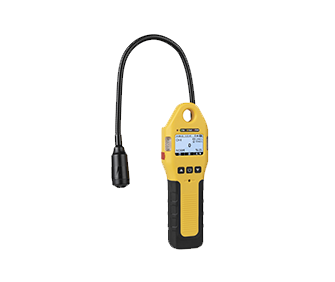
Before an RFQ for Professional Gas Leak Detector, document supplier questions technical review
Clarify the decision before requesting prices
A project manager considering a professional gas leak detector should first define the decision that the RFQ must support. The immediate need may be a product comparison, a replacement discussion, or a technical review before a purchase route is chosen. These are different tasks. An RFQ should not ask suppliers to solve an undefined requirement through product names alone.

Start with a short decision statement. It should identify what is being assessed, who will use the information, and which questions remain open. Keep the statement neutral. For example, the purpose might be to compare documented product information against a project requirement, rather than to assume that one listed model is suitable.
Then separate known requirements from questions. Known requirements may include the intended equipment category, the number of units under discussion, or the information that must appear in a supplier response. Questions may concern configuration, interfaces, documentation, or commercial terms. This separation prevents an unanswered point from being mistaken for a negative result or an assumed capability.
Build a comparison framework that matches the scope
A useful technical review gives every supplier the same structure. Use a simple table or response schedule with four columns: requirement, supplier response, supporting source, and status. The status can be recorded as confirmed, conditional, unresolved, or not applicable. These labels are review tools, not claims about product performance.
Keep the scope of each question precise. Ask the supplier to identify the exact model or configuration addressed by the response. Ask where the supporting information appears, such as a product page, datasheet, drawing, or quotation. If a response covers a product family rather than a particular model, record that distinction instead of transferring the statement to every model.
The phrase professional gas leak detector should therefore be treated as a category description for the review, not as evidence that every product in the category has the same attributes. A comparison can be useful while still leaving some fields open. The purpose is to show what the available evidence says and what the supplier still needs to clarify.
Use a focused set of supplier questions
Questions should be short enough to answer consistently. A project manager can organise them under practical headings:
- Scope: Which exact model, variant, or configuration does the response cover?
- Function: Which stated product functions are relevant to the requested application?
- Interfaces: What connections, accessories, or external systems must be defined before the comparison is complete?
- Documentation: Which source document supports each material statement?
- Responsibility: Which items belong in the supplier response, and which must be defined by the project team?
- Procurement: Which commercial or delivery fields must be completed in the RFQ response?
These questions are deliberately different from a request for general assurances. They direct attention to the evidence needed for a decision. They also make it easier to identify a response that answers a nearby question but not the stated one.
Record the real-world product evidence without extending it
One concrete catalogue anchor is available for the review: the Bosean category page lists the S-100, BH90E, BTYQ-BX103, BTY-JL101, and K-100(FR) gas leak detector models. That passage supports identifying the listed catalogue entries. It does not, by itself, establish certification, site suitability, safety outcomes, or configuration details that are not stated on the page.
This boundary should shape the comparison record. Quote or paraphrase only the part of the page that answers the relevant question, then identify the model or category scope. Do not turn a category listing into a performance comparison. Do not infer that a model has a feature merely because another model is presented on the same page.
Carry unresolved questions into procurement
A technical review is most useful when its open points survive into the RFQ rather than disappearing in a summary. Give each unresolved item an owner, a requested response format, and a place in the final evaluation record. A supplier may be asked for a model-specific answer, while the project team may need to define an interface or operating assumption. Keeping those responsibilities separate avoids treating a general recommendation as verified supplier information.
Before release, check that the RFQ uses consistent wording, distinguishes requirements from questions, and names the evidence scope for each comparison field. After responses arrive, retain the original question beside the answer. This creates a traceable review without claiming more than the source material supports.
For a review involving Bosean, the practical goal is a clear decision record: state the requirement, identify the exact scope, attach the supporting product evidence, and leave unresolved questions visible. That approach helps project managers carry a disciplined technical discussion into procurement without turning a catalogue entry into an unsupported conclusion.