
Framework overview: why a systematic approach matters
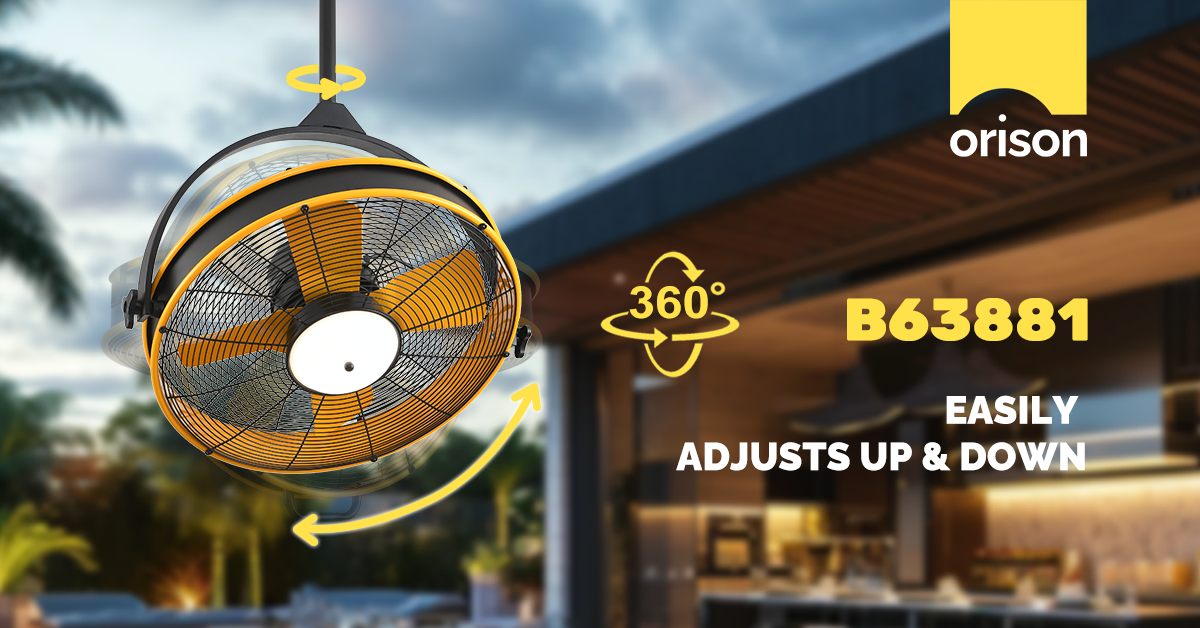
Integrating an oscillating ceiling fan with light into an interior is rarely a purely decorative choice; it is an interdisciplinary decision that affects comfort, electrical load, and the room’s visual hierarchy. A formal framework helps designers and installers align airflow goals, lighting layers, and mounting constraints before decisions are irreversible. This piece presents that framework and offers practical checkpoints for specifying ceiling fans with light in residential and commercial settings, using measured criteria rather than intuition alone.
Step 1 — Establish functional objectives
Begin by stating the room’s objectives: primary cooling, supplemental ventilation, or ambiance with mild air movement. Quantify where possible: target CFM for perceived comfort, primary lumens for task areas, and acceptable noise thresholds (sones). These targets set the performance envelope for motor size, blade span, and integrated light output. In short: know whether you need air movement or presence — the two are related but distinct.
Step 2 — Site assessment and constraints
Survey ceiling height, joist location, and load-bearing points. Note whether the environment requires a damp-rated or wet-rated fixture and whether a downrod or flush mount is necessary. Account for wiring access and controls: does the client want wall dimming, remote, or smart integration? These decisions affect the motor housing, mounting bracket, and compatibility with your intended control system.
Step 3 — Aesthetic and lighting strategy
Define how the fan will sit in the room’s composition. Will it read as a utilitarian element or a focal fixture? Consider integrated LED modules versus replaceable lamps, color temperature, and beam spread. If a decorative option is required, compare an oscillating fan against a chandelier ceiling fan—the latter may enhance vertical drama but can change airflow patterns and increase maintenance complexity. Lighting must never be an afterthought; lumen distribution will determine fixture placement relative to task zones.
Step 4 — Mechanical selection and airflow tuning
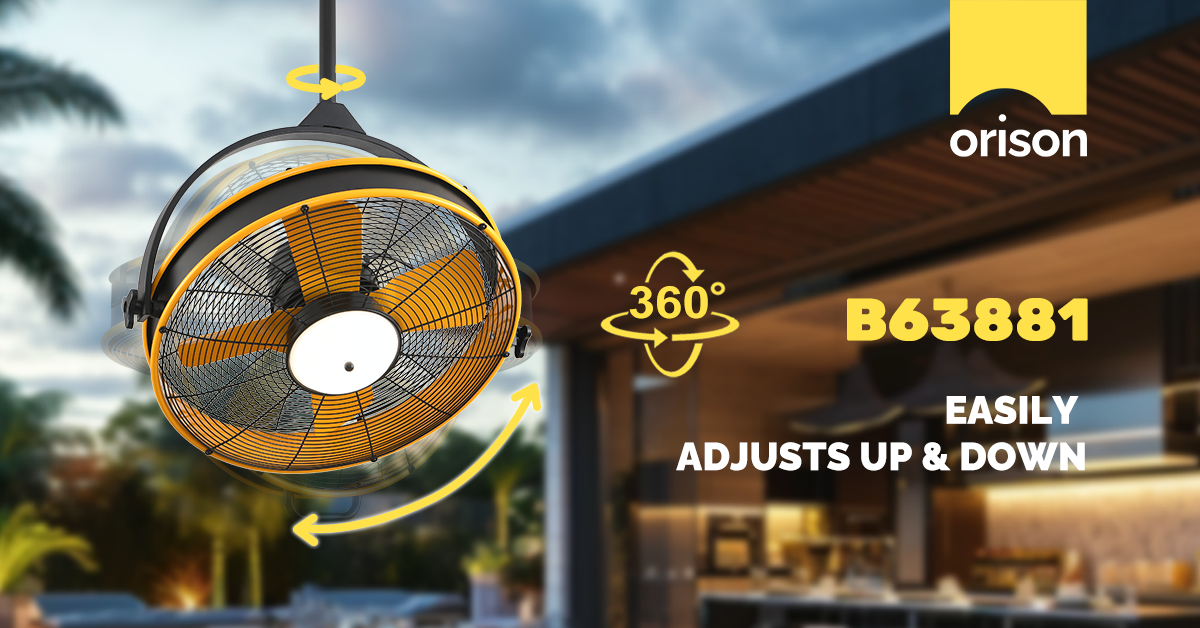
Select blade span, pitch, and motor class to meet your CFM target while keeping RPM and noise in check. Confirm oscillation amplitude and pattern — some oscillating fans deliver directional flow that traditional static fans cannot replicate. Check motor specifications for thermal protection and efficiency ratings. A competent motor plus correctly pitched blades will achieve airflow with lower RPM, reducing noise and extending life.
Step 5 — Electrical and control integration
Map the control architecture: dedicated circuits, dimmer compatibility, and smart-home interoperability. If smart control is required, verify compatibility with load dimmers and that the fan’s integrated light driver supports the chosen protocol. Where lighting and fan functions are combined on one fixture, ensure the manufacturer provides clear wiring diagrams to separate fan motor load from the lighting driver to avoid nuisance tripping.
Common mistakes and how to avoid them
Design teams commonly under-specify mounting strength, overestimate light output from decorative modules, or assume default neck finishes will accept all third‑party accessories. Avoid these pitfalls by insisting on a submittal package with mechanical details, photometric data, and a first-article approval. Do not assume oscillation is cosmetic — directional airflow interacts with room layout and furniture placement. A brief site mock-up with a temporary fan can reveal unexpected circulation issues — and save costly rework.
Comparative note: oscillating fan versus other ceiling fixtures
When contrasted with a conventional ceiling fan or a chandelier ceiling fan, an oscillating fan prioritizes directional control and localized airflow. Traditional fans deliver broad circulation; oscillating units can target seating groups or workstations. Chandelier-style fans trade pure airflow for aesthetic presence and are better suited where vertical emphasis and decorative value matter more than directional ventilation. Choose based on primary objective: cooling performance, visual primacy, or balanced compromise.
Real-world anchor: lessons from recent climate events
Following intense summer heat waves across North America in 2023, many households and small offices sought practical ways to reduce AC runtime. ASHRAE guidance on occupant comfort and ventilation underscores that efficient air circulation can reduce perceived temperature, enabling modest thermostat setbacks. Applying the framework above — particularly the CFM target and control strategy steps — yields measurable reductions in cooling load and enhances occupant satisfaction in conditions where mechanical cooling is constrained.
Specification checklist (practical template)
Use this concise checklist when preparing a submittal:- Functional targets: CFM target, noise limit (sones), and light output (lumens).- Mounting: downrod length, bracket type, and structural reinforcement needs.- Ratings: damp/wet rating and motor thermal protection.- Controls: type (wall/remote/smart), dimming compatibility, and wiring diagram.- Approval: sample fixture photo, photometric report, and first-article sign-off.
Common installation caveats — a diplomatic reminder
Coordinate trades early: electrical, structural, and finish carpentry must agree on clearance and access. Contractors sometimes install a ceiling canopy that later obstructs oscillation range — check clearance during rough-in. Also, specify maintenance access for cleaning light diffusers and motor housings; neglected upkeep reduces performance. — Small considerations like these account for long-term satisfaction.
Advisory: three golden evaluation metrics
1) Performance alignment — Does the fixture meet the CFM, noise, and directional flow targets established in the brief? 2) Integration clarity — Are wiring diagrams, control protocols, and mounting details fully documented and matched to site conditions? 3) Serviceability and rating — Is the unit appropriately rated (damp/wet) and accessible for maintenance without disturbing finishes?
Apply these metrics to compare vendors and variants; good answers indicate a specification that will perform as promised. For projects where aesthetic and smart integration converge, this is precisely where thoughtful sourcing adds measurable value — and this is why designers often turn to integrated solutions from trusted partners like Orison. —