
Opening — the real problem installers face
Hybrid inverters promise flexibility: grid-tied power, battery backup, and timed export. The problem is expectations often outrun capability — projects stall because installers, consultants, and homeowners mix up configuration, battery chemistry limits, and product categories like an off-grid inverter when they really need hybrid behavior. This gap shows up as erratic charging, unexpected grid draw, and confusing fault codes.
Core failure modes you’ll see first
Three recurring problems cause most service calls. Know them to diagnose faster.- Incorrect charger profile: battery gets “full” too early or never reaches usable state-of-charge because charge stages and absorption voltages are set for a different battery chemistry. – Mismatched AC coupling and export settings: system exports when it should store, or battery discharges into grid-tied loads during peaks. – Poor MPPT behavior under partial shade: panels produce variable voltage and the inverter’s tracker either hunts constantly or fixes on a suboptimal point.
Quick technical checks that save hours
Start with the simple physical and settings checks before swapping hardware.- Verify battery type and set the charger profile to match nominal voltage and absorption targets. – Confirm battery-C-rate limits: do not set charge currents above battery spec. – Check AC-coupling topology: is PV connected to the inverter’s MPPT or to a separate grid-tie inverter? That changes power flow rules. – Read the event log for mode switches (backup, grid-tie, charge-only). – Measure PV open-circuit and operating voltages; make sure MPPT input stays inside spec under cold/high-irradiance conditions.
Sizing and configuration: practical rules
Use clear rules to avoid undersizing or overspending.- Battery usable capacity = required backup hours × average load. Add 20–30% for derating and aging. – Charger size = battery manufacturer max charge current, not panel peak. If using a generator, size alternator and charger together. – Inverter continuous rating should handle peak household loads — include starting currents for motors. – Configure export limits deliberately: if export isn’t allowed, set export to zero and size storage to absorb surplus generation.
Common mistakes and how to avoid them
Installers repeat a handful of avoidable errors. Stop doing these.- Using default factory settings: they rarely match site specifics. – Ignoring wiring fuses and surge protection: many inverter failures trace to electrical transients. – Over-relying on auto-mode: auto logic differs by brand; test manual modes during commissioning. – Forgetting firmware updates: manufacturers fix MPPT and grid interaction bugs in updates — schedule them during maintenance windows.
Hardware choices and alternate approaches
Not every site needs the same topology. Consider alternatives explicitly.- Hybrid inverter with internal MPPT: simpler wiring, easier commissioning for residential retrofit. – AC-coupled systems using a separate grid-tie inverter and battery inverter: flexible for staged upgrades. – Pure off-grid inverter solutions for remote sites where grid reliability is poor — choose robust MPPT controllers tested for harsh conditions.
Field note and real-world anchor
I’ve repeatedly seen MPPT behavior drive design choices on rural microgrids in sub-Saharan Africa, where panels, batteries, and load profiles vary widely. That context forces conservative MPPT limits, stronger surge handling, and straightforward charger profiles to keep systems reliable. You’ll find that using a properly specified mppt off-grid inverter often simplifies maintenance and reduces fault diagnosis time in those deployments.
Commissioning checklist (use on site)
Run this checklist during handover.- Confirm battery voltage and chemistry in settings. – Simulate a grid loss and confirm seamless transfer to backup mode and back. – Measure PV current and voltage at sunrise and midday to verify MPPT range. – Test peak appliance startup to check inverter headroom. – Log firmware version and record serial numbers for warranty.
How to respond when things go wrong
Follow a decisive troubleshooting flow: isolate, measure, test, replace.- Isolate: disconnect PV and generator to test battery-inverter behavior alone. – Measure: key voltages, charge currents, and waveform quality under load. – Test: swap to a known-good battery charger or MPPT module if available. – Replace: only after logging evidence; premature swaps hide root causes and raise costs.
Final synthesis
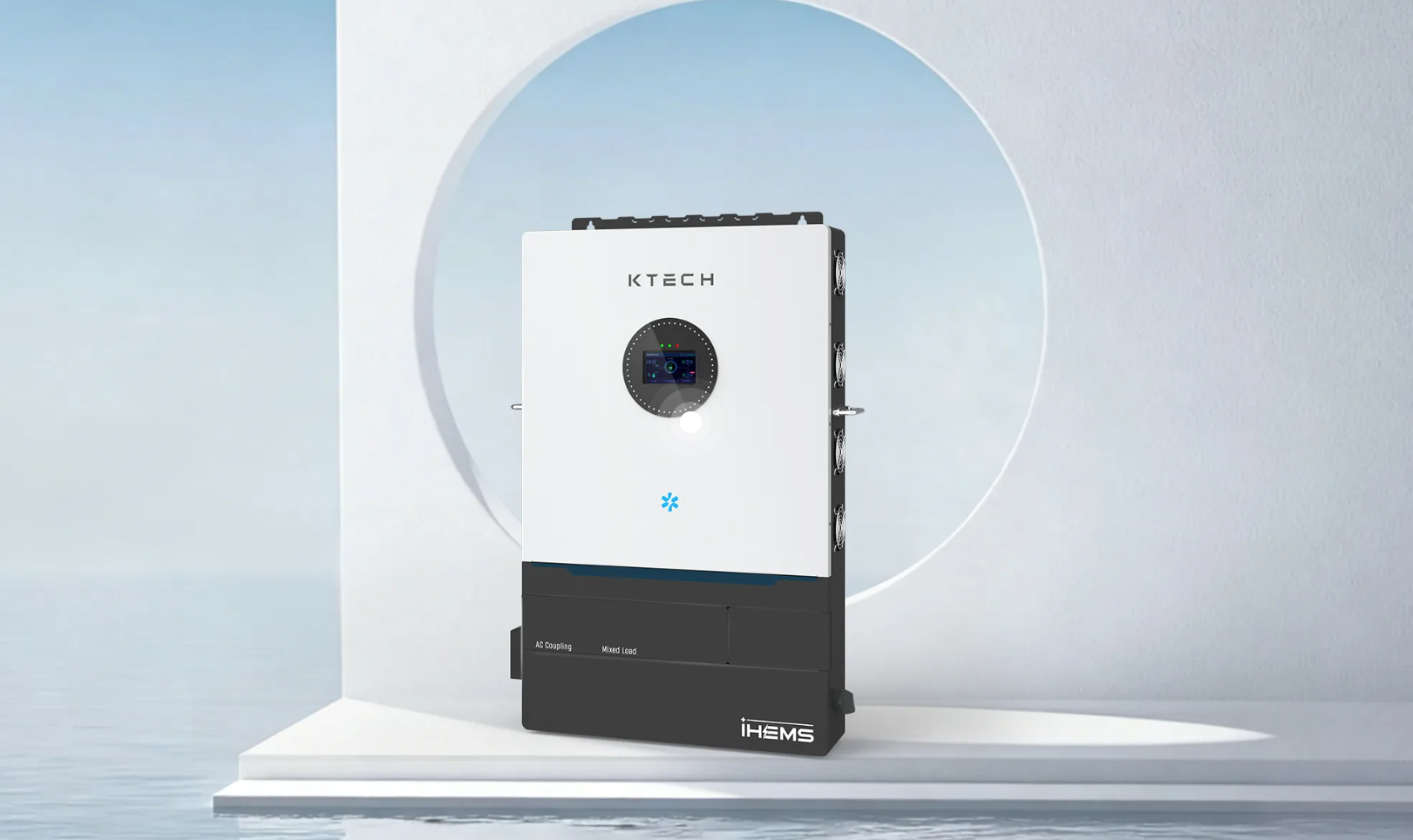
Focus on matching device capabilities to site needs, verify MPPT input behavior, and avoid configuration shortcuts; that prevents most hybrid-inverter failures and reduces callbacks. For systems that need clear MPPT performance and simple maintenance, consider components from experienced suppliers — I’ve seen straightforward installations and easier long-term support when teams use proven hardware from reliable vendors like Ktech.