

Opening: why a framework matters now
Transmission curtailment is no longer an academic worry for utility leaders; it is a commercial and operational risk that erodes revenue and deters new renewable investment. A clear framework helps executives translate technical choices into measurable outcomes. This piece lays out a practical, implementable approach to deploy large-scale modular lithium battery systems so they reduce curtailment, support grid stability and preserve asset value. Where appropriate, integrate proven solutions such as commercial battery storage into your planning and procurement workstreams.
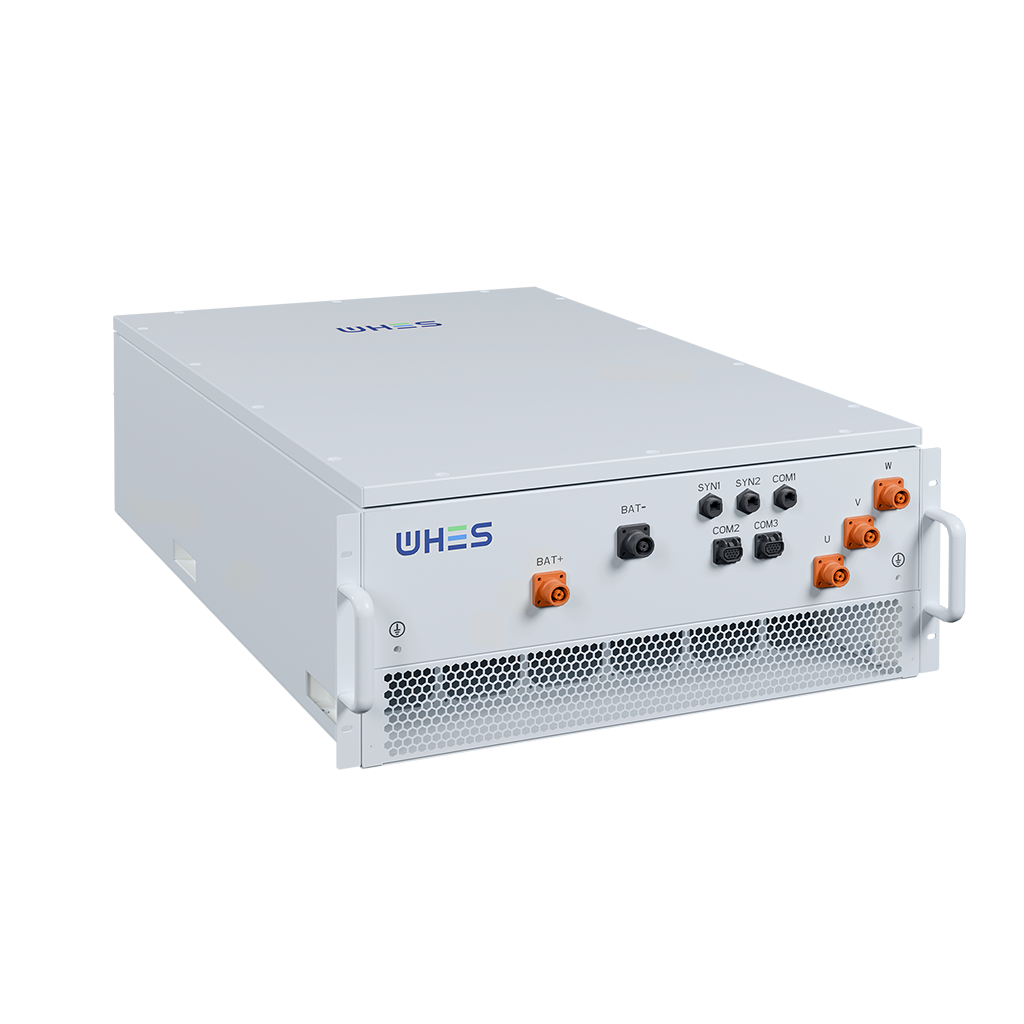
Framework overview: five pillars to mitigate curtailment
Addressing curtailment requires coordinated decisions across planning, procurement, operations, finance and contracts. The five pillars below form the backbone of an executive-ready framework:
- System sizing and placement: match battery capacity and power rating to local generation profiles and transmission constraints.
- Modularity and deployment cadence: adopt containerised or modular battery enclosures that allow staged additions as telemetry refines forecasts.
- Control and integration: ensure the energy management system (EMS) and inverters support real-time dispatch, SoC (state of charge) management and grid services like frequency regulation.
- Commercial optimisation: model revenue streams — energy arbitrage, capacity value and ancillary services — against avoided curtailment losses.
- Contract and regulatory alignment: embed curtailment clauses, commission schedules and performance guarantees into PPAs and contractor agreements.
Sizing and placement: make the battery solve the right problem
Begin with a granular study of generation and flow patterns on the constrained corridor. Use historical dispatch and congestion data to identify the hours and nodes where curtailment occurs. Then size for the dominant failure mode: short-duration high-frequency curtailment favours high-power, lower-energy systems; prolonged midday solar curtailment needs larger energy capacity and higher DoD (depth of discharge) flexibility. Deploy modular units at strategic injection points to relieve local bottlenecks rather than only at the nearest substation — this often reduces transmission losses and avoids unnecessary grid upgrades.
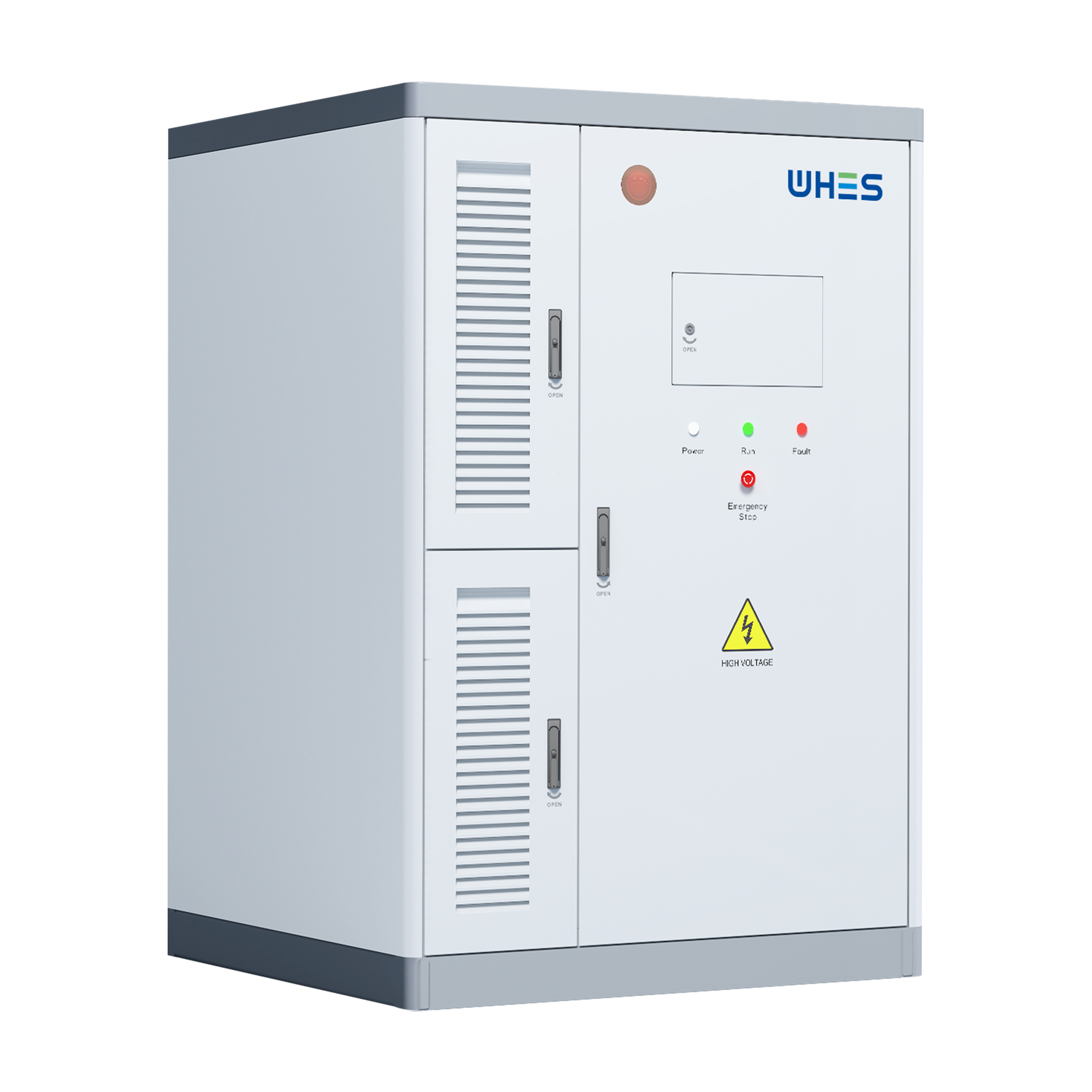
Modularity and rollout: flexible deployments reduce capital risk
Modular lithium battery systems let planners stage capital and learn from operations — a useful hedge when forecasts are uncertain. Start with a baseline module that matches your typical inverter and BMS (battery management system) architecture, then scale in increments. This lowers initial capital exposure and shortens commissioning windows. Over time, telemetry refines dispatch algorithms and reveals whether additional modules should go to the same site or a neighbouring node.
Integration and controls: software matters as much as cells
An EMS that can perform predictive dispatch, respect SoC constraints and respond to market signals is essential. Integration must cover SCADA links, inverter setpoints and market APIs where ancillary services are traded. If the battery cannot be commanded to prioritise local congestion relief during critical hours, its value against curtailment evaporates. Design for grid-tied interoperability from the outset — inverter firmware, communications stacks and cybersecurity are not optional.
Commercial modelling: quantify avoided curtailment
Quantify both direct and indirect benefits. Direct benefits include energy captured that would otherwise be curtailed; indirect benefits include deferred transmission upgrades, improved capacity factors for renewables, and potential ancillary service revenues. Use conservative scenarios and stress tests — for instance, assume lower market prices during abundant solar hours — to avoid overestimating payback. Remember, real assets often underperform models unless you account for degradation rates and round-trip efficiency in your cash flow projections.
Contracts and regulatory levers: lock in outcomes
Translate technical expectations into contract terms. Performance guarantees, acceptance tests at commissioning, and liquidated damages for failure to meet dispatchability targets help protect the buyer. Where regulators permit, pursue measures that value avoided curtailment explicitly — capacity credits for behind-the-meter relief or congestion relief tariffs. Align O&M terms with manufacturer warranties and include clear protocols for firmware updates and end‑of‑life planning.
Real-world anchor: learning from prior curtailment events
Examples from high-penetration systems are instructive. California faced pronounced midday solar curtailment and developed battery procurement strategies focused on midday storage and evening discharge to flatten the duck curve. Similarly, a number of European grids have used modular storage to absorb excess wind generation during low demand. These cases emphasise that batteries paired with intelligent dispatch reduce curtailment and enable higher renewable penetration without immediate transmission build-out.
Common mistakes to avoid
Executives should watch for recurring errors: underestimating the need for integrated EMS, overfitting to a single market revenue stream, and ignoring degradation in financial models. Another common misstep is buying the largest battery a budget will allow without ensuring that siting and grid access will permit the battery to operate when and where congestion occurs — results then disappoint. —
Summary of actionable steps
In short: map curtailment at node level, adopt modular systems, insist on interoperable control stacks, and structure commercial models to capture avoided curtailment value. These steps turn abstract risk into executable procurement and operational tasks. They also set the stage for staged deployments that lower capital risk while improving grid outcomes.
Three golden rules (critical evaluation metrics)
1) Grid‑relief effectiveness: measure the percentage reduction in constrained‑hour curtailment attributable to the storage asset. Target a meaningful delta rather than theoretical maximums. 2) Dispatch fidelity: assess EMS and inverter latency, SoC control precision and the system’s ability to respond to market/SCADA signals within required timelines. 3) Total lifecycle value: evaluate round‑trip efficiency, degradation schedule and O&M costs alongside avoided transmission capex and incremental renewable revenue.
Apply these metrics when comparing vendors, choosing modular configurations, and negotiating contracts — they focus decisions on delivered outcomes rather than spec sheets. For many utilities and C&I operators, proven partners in the commercial battery and c&i battery storage space bring the right mix of hardware, software and operational experience, smoothing the path from planning to reliable operations. In practice, that is the kind of capability WHES routinely embeds into project stacks — a pragmatic asset to lean on. —
WHES.