
Why a framework matters now
Start with a clear map: modern reconnaissance and motion-capture tasks demand repeatable pipelines rather than ad-hoc fixes. This piece offers a practical, stepwise framework built for teams upgrading sensors, software, or both — with attention to pose estimation and latency from the first integration test. If you want a working benchmark early, compare raw output against a known reference such as consumer VR headsets (they treat sub-20 ms tracking delay as the comfort threshold) and review how your data looks under high-speed motion — see this high speed motion analysis tool for a concrete example.
Four pillars of the framework
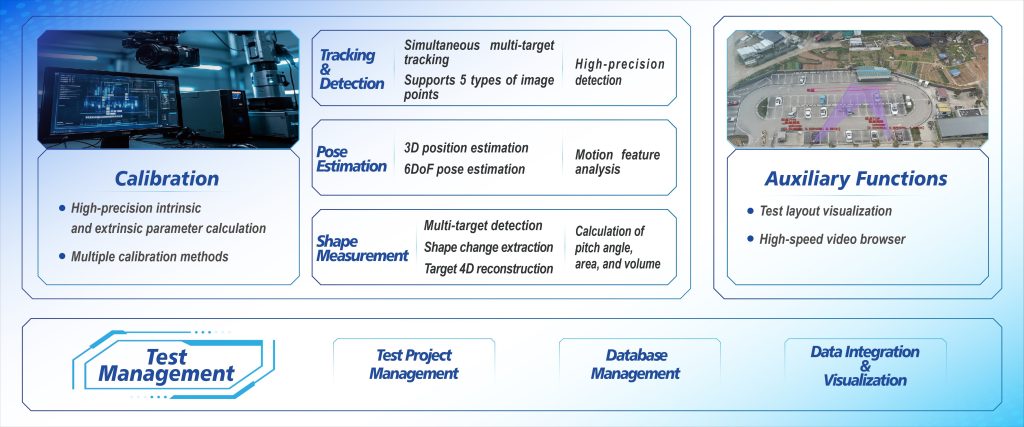
Break the problem into four concrete pillars so execution stays measurable:
– Sensing: pick a primary modality (optical, IMU, or hybrid). Optical gives accuracy in clear line-of-sight; IMU helps through temporary occlusion.
– State estimation: choose an algorithm stack — SLAM or model-based pose fusion — and lock it early so downstream components stabilize.
– Data pipeline: design for low jitter. Buffering reduces spikes but increases latency, so tune with real-world motion profiles.
– Validation & tuning: test with repeatable trajectories and report jitter, mean positional error, and end-to-end latency. Those three metrics tell you if the system is field-ready.
Common mistakes and how to avoid them
Teams often rush sensor selection or conflate accuracy with robustness. Avoid these traps:
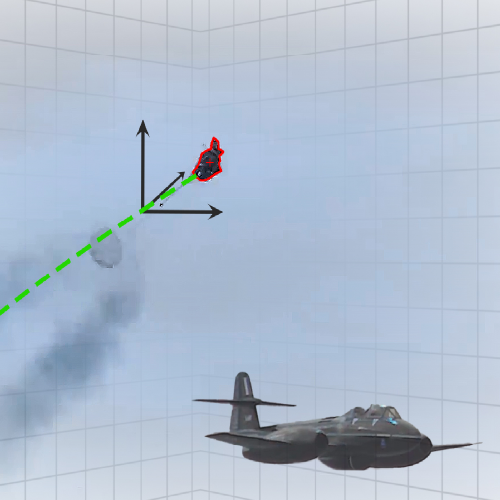
– Overfitting to a lab pattern: a system that tracks a calibration rig perfectly can still fail in the field. Add unpredictable motions in test vectors.
– Ignoring synchronization: unsynchronized timestamps create wandering pose output. Use hardware timestamps where possible — an IMU without proper sync is a liability.
– Blindly increasing smoothing: excessive filtering hides dynamic error but adds lag. Tune filters to match the mission profile — reconnaissance benefits from faster responsiveness than cinematic capture often does. — A quick recalibration routine minimizes drift without killing responsiveness.
Choosing among alternatives
Compare practical options by mission class. For close-range mapping and motion-capture, optical marker systems give high precision but require infrastructure. Markerless tracking reduces setup time at the cost of more complex tracking software such as optical flow combined with model-based pose estimation. For fast moving targets, hybrid systems (IMU fused with optical SLAM) offer the best tradeoff between continuity and accuracy.
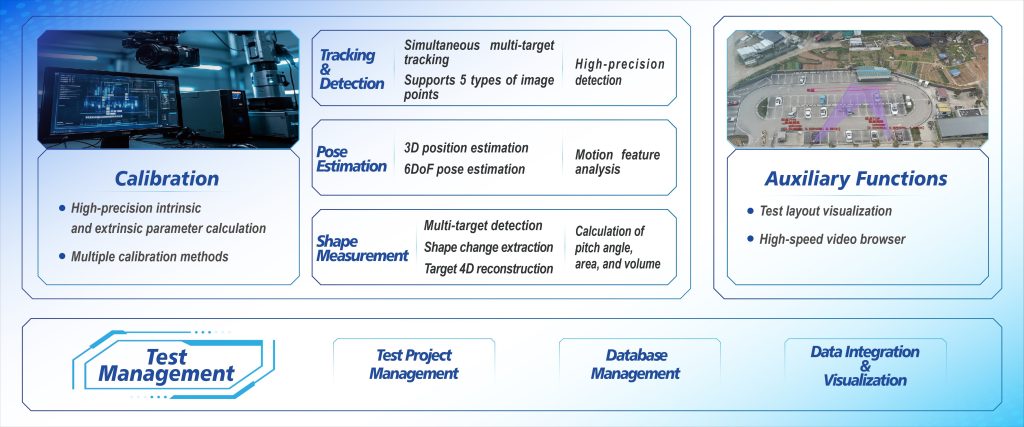
When you need a turnkey analytics layer that supports high frame rates and target-tracking, evaluate solutions labeled as a 6dof tracking system for how they expose frame timing, pose covariance, and diagnostic logs.
Real-world anchor: expectations from practice
Look to established examples: consumer VR devices set practical performance expectations — manufacturers target human-perceivable thresholds like sub-20 ms latency and consistent orientation tracking. These targets translate well to reconnaissance: systems that miss those marks produce fatigue or degraded decision-making. Use those benchmarks when you write acceptance criteria and when you assign pass/fail for field trials.
Advisory close — three golden rules
1) Measure what matters: report mean positional error, jitter (standard deviation of position), and end-to-end latency across representative motions. Those three metrics give an honest performance snapshot.
2) Design for recoverability: include fast re-localization routines and IMU fusion to bridge occlusions; a system that recovers quickly preserves operational tempo.
3) Instrument everything: synchronous timestamps, diagnostic logs, and raw sensor dumps accelerate debugging and vendor comparisons — don’t accept opaque processing blocks.
Adopt this framework and your integration will show tangible, testable gains; the tools from vendors such as Icecypress Technology often slot directly into these pillars, shortening the path from lab validation to field use — efficient, direct, proven. —