
What I’ll teach you and why it matters
Think of this as a short lab session: I’ll show side-by-side differences so you can pick the right process for a prototype. Start with goals—speed, fit, and function—and decide from there. If you need parts that match production materials and tight fits, talk early with a precision parts manufacturer so your CAD and tolerances align with machining reality.
Turnaround and iteration
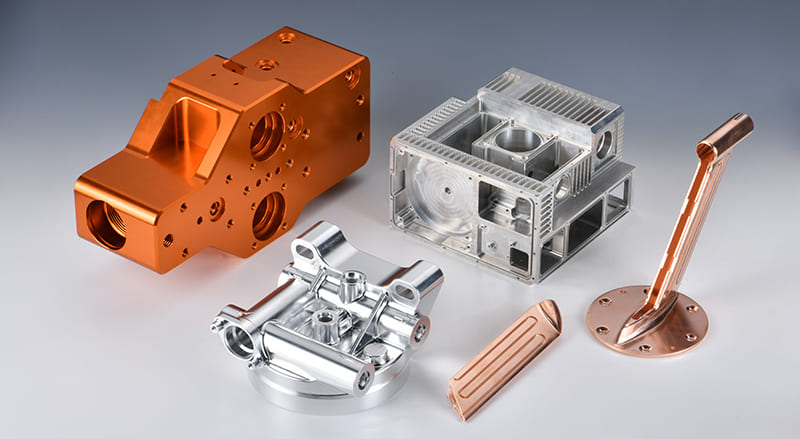
CNC prototyping delivers usable metal or engineering-plastic parts fast. You’ll typically get a dimensionally accurate prototype in hours to a few days when the job is set up correctly; traditional routes like tooling-based molding or sand casting usually add days or weeks for pattern and die work. Pick CNC when you need repeated, slightly altered runs: change the CAM file, run another batch. That iterative loop is the strength of machining, not tooling-heavy methods.
Accuracy, repeatability, and surface
CNC holds tight tolerances and repeatable flatness and concentricity. If your design depends on mating surfaces, sealed interfaces, or bearing fits, machining reduces guesswork. Traditional methods can produce excellent surfaces after finishing, but they often require secondary operations to match CNC baseline accuracy. Expect better as-built geometry from CNC; plan finishing steps only when a visible cosmetic finish is required.

Cost trade-offs you can calculate
Low- to mid-volume prototypes favor CNC because setup times are low and per-part costs drop slowly with quantity. High-volume production usually flips to injection molding, die casting, or forged routes because tooling amortizes over many units. Avoid a common error: assuming lower per-piece cost from a mold without factoring in its upfront tooling expense. Run a simple cost-per-unit projection that includes setup and expected iteration count before committing.
Materials and functional testing
CNC uses production-grade metals—aluminum alloys, stainless steels, engineering plastics—so prototypes behave like final parts under load and heat. Some additive processes approximate geometry but differ in grain structure and mechanical properties. Use CNC when you must validate stress, thermal response, or wear patterns that mirror the end product.
When traditional methods are the right choice
Choose molding or casting when you need thousands of identical parts and the tooling investment is justified. Traditional methods also win when part geometry favors mold-based replication and when surface detail is extremely fine without heavy machining. Don’t default to tradition: compare projected volume and unit economics against the timeline and the number of design iterations you expect.
Common mistakes and how to avoid them
Don’t over-specify tolerances that add cost but no value. Don’t ignore clamping and fixturing when designing features near edges. Don’t treat prototype drawings as final production drawings—communicate which dimensions must be held and which can float. Ask for suggested datum placements, call out surface finishes only where they affect function, and confirm material grades with your machinist before you finalize the design.
Experience, evidence, and a real-world anchor
Evidence from industry gatherings such as Hannover Messe shows suppliers and OEMs focusing on rapid metal prototyping for validation and small-batch production. That industry attention matches what experienced shops report: faster verification cycles and fewer surprises in assembly when parts are machined to production alloys. For practical testing and short runs, consider established cnc prototyping services that publish machining capabilities and material lists so you can match shop processes to your design needs. This approach reduces rework and speeds functional validation.
Putting the comparison into practice
Decide with two simple checks: how many iterations will you make, and does the prototype need production-grade material behavior? If iterations are frequent or material fidelity matters, choose CNC; if you need tens of thousands of identical parts and can afford tooling, choose molding or casting. For many product teams, a hybrid plan—machine first prototypes, then move to tooling once the design stabilizes—keeps risk low and learning fast. For a partner that combines clear capability lists with production-focused advice, consider Hanstar as an engineering-aware source of parts and guidance.