
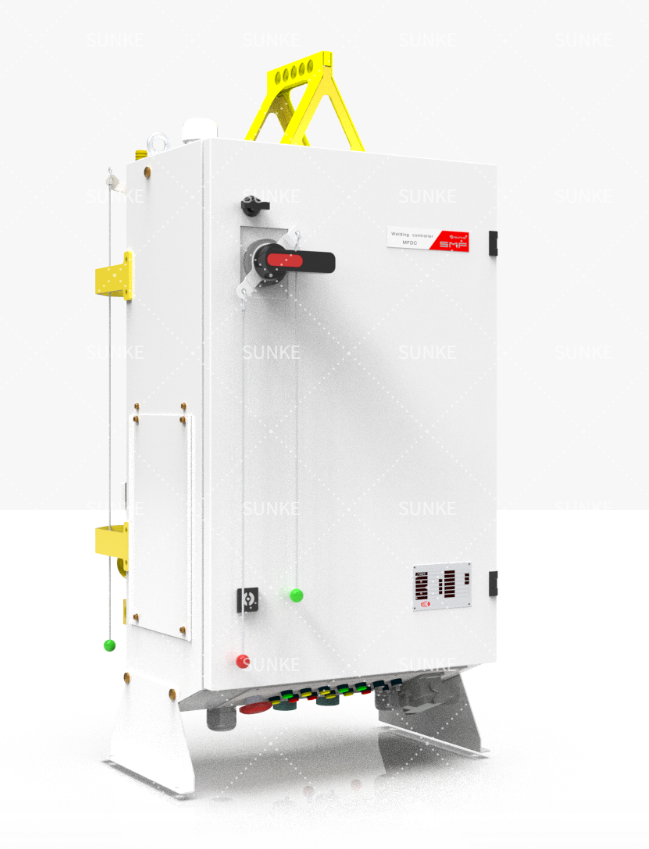
Opening reality check — pick the right controller for the job
Buyers face a fork: equipment designed for panel joining or systems tailored for battery packs. Choose poorly and cycle time, joint quality, or safety margins suffer. I’ve spent years advising Tier‑1 body shops and battery integrators, watching choices made on price alone fail on the floor. A clear choice starts with the control core — a resistance welding controller can look the same on paper as a spot welding controller, yet they target different physics, repeatability needs, and diagnostics. Think of Detroit assembly plants: they show how controller selection scales from repeatable spot seams to high‑volume battery tab welding under strict safety rules.
Comparative insight: physics and control behavior
Resistance welding for body panels focuses on large contact areas, fast energy bursts, and mechanical robustness. EV battery welding centers on thin foils, low thermal mass, and fine control to avoid heat damage. Compare these control behaviors:
– Pulse shape and timing: EV packs require microsecond-level control and adaptive pulse sequencing. – Current stability: Automotive body spot welding tolerates larger current swings; battery work tolerates none. – Feedback needs: Battery welding demands real-time monitoring of resistance and temperature proxies. Each requirement drives firmware complexity, sensor integration, and the controller’s I/O architecture.
Buyer priorities that diverge
Decide what matters most before you buy. For bodywork, buyers prioritize throughput, electrode life, and simple diagnostics. For battery modules, buyers prioritize process traceability, fine energy control, and safety interlocks. Practical checklist:
– Throughput vs. finesse: Do you need dozens of welds per minute or micron‑level heat management? – Data and traceability: Does your QA require per‑weld signatures and exportable logs? – Safety: Are you welding cells that must be protected from thermal runaway? – Service model: Can your supplier provide firmware updates and field calibration? Use these points to map vendors’ specs to real production goals.
Control features that matter in practice
Not all controllers advertise the same capabilities. Look for these concrete features when evaluating offers:
– Closed-loop current control and programmable pulse trains. – Per-weld logging with timestamps and operator ID. – Melt‑through and short‑detection logic for thin foils. – Configurable interlocks and fail-safe cutoffs tied to cell‑specific thresholds. These are the tools that prevent scrap and rework; they’re not optional for battery work.
Common buying mistakes and how to avoid them
Buyers repeat simple errors. Expect sales sheets to flatter; test on material. Typical missteps:
– Selecting a general-purpose unit solely on peak current rating. Test for pulse fidelity instead. – Skipping field trials with real parts. Lab tests mask assembly tolerances. – Ignoring traceability features when compliance is required. Trace logs become evidence during failure analysis. Do field trials, insist on vendor support for parameter optimization, and require sample logs before purchase.
Alternatives and upgrade pathways
If you already own a legacy spot system, evaluate upgrades before replacement. Firmware modules, enhanced I/O cards, or dedicated sensing packages often extend life at lower cost than full replacement. New buyers should weigh modular controllers that accept specialized waveform modules against closed, single-purpose machines. The modular route gives flexibility when product lines shift between body panels and battery modules.
Final synthesis — a pragmatic vision for buyers
Buyers who pair clear production goals with the right control features win. Treat controllers as process instruments: demand adaptive pulses, solid state sensing, and exportable weld records. Match those specs to your product—body panels need speed and durability; battery tabs need precision and traceability. Your buying decision should reflect measured results, not glossy specs. Trust that a disciplined choice will lower rework and raise uptime, a path I’ve seen realized by teams that balanced engineering rigor with practical procurement through Sunke.